
Alleghany County Criminal Court Records
A criminal court record is the case-level file kept by the court after a criminal matter opens. It can start from a citation, warrant, magistrate process, information, indictment, or other charging instrument. From that point forward, the record tracks the court side of the matter: appearances, bond and release conditions when shown, pleas, motions, hearings, continuances, dispositions, judgments, sentences, costs, and probation terms. For a narrower look at the charge itself, use the Alleghany County arrest records and court charges page.
Superior Court and District Court both produce criminal records in Alleghany County. Superior Court handles felony criminal matters and superior-level proceedings. District Court handles misdemeanors, infractions, traffic matters, initial criminal proceedings, and magistrate-related events. Alleghany County is in Prosecutorial District 34, Superior Court District 34, and District Court District 34. The District Attorney prosecutes criminal cases, while the Clerk of Superior Court maintains the court file and provides public access to records when the law allows.
Search Alleghany County Criminal Court Records
The online starting point is the NC eCourts Portal. Alleghany County went live in eCourts on July 21, 2025, which means current public criminal case information routes through Portal tools such as Smart Search and Search Hearings. Search by defendant name, case number, citation number, or other known identifiers. Use Alleghany County as the location filter when possible. The Portal requires browser support, cookies, JavaScript, and CAPTCHA during use.
- Open the eCourts Portal and use Smart Search for criminal case information.
- Search by defendant name, case number, citation number, or another confirmed identifier.
- Filter by Alleghany County, case type, case status, filing date, or advanced criminal identifiers if they apply.
- Open the case summary and review the charges, hearing entries, disposition, judgment, costs, and sentence fields that are public.
- Contact the Clerk of Superior Court for paper files, certified copies, or a certified single-county criminal record search.
Certified criminal record searches are not the same as a casual Portal lookup. North Carolina's criminal background check source explains self-service terminal searches and certified single-county searches through the clerk using AOC-CR-314. The certified single-county search fee listed in the research file is $25.
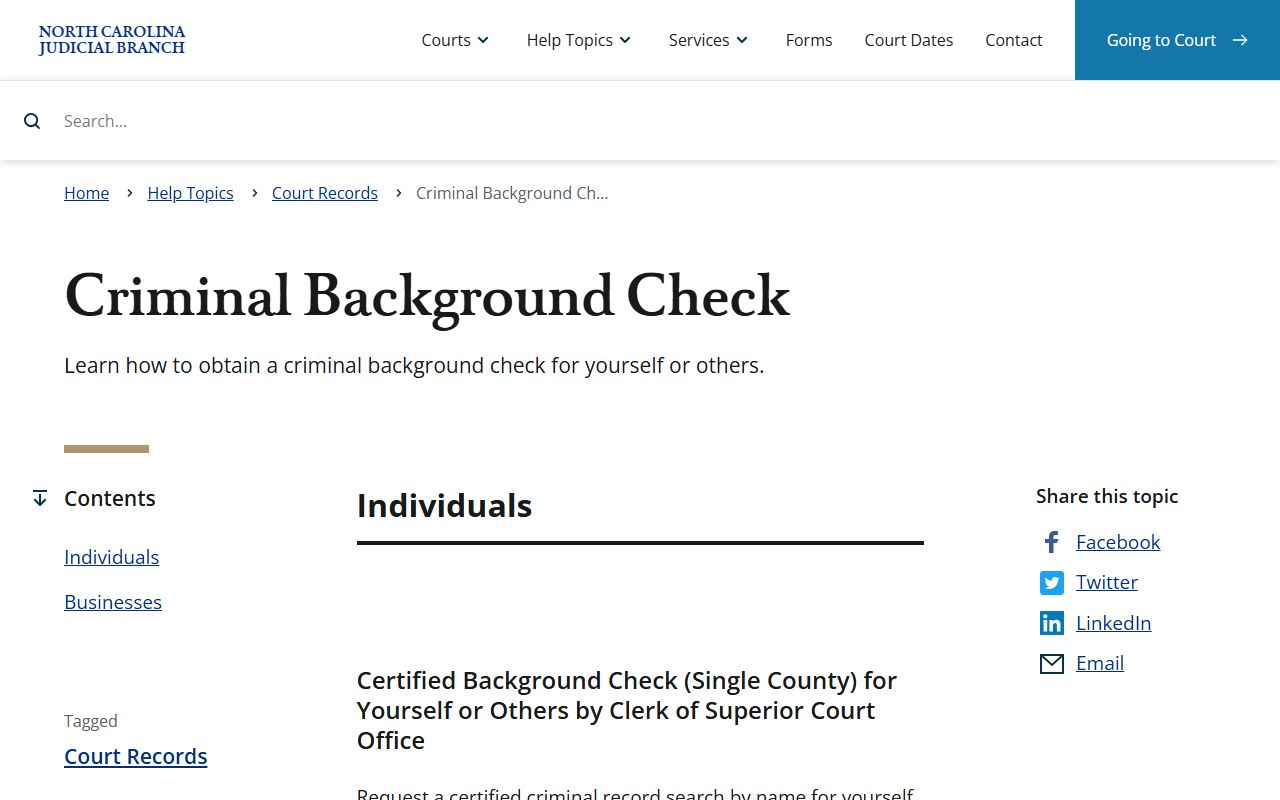
That state guidance is important because an online case result may not meet an employer, licensing, court, or agency need for a certified record.
Alleghany County Criminal Case Flow
A criminal record changes as the case moves through court. A charge may begin with law enforcement or magistrate process, but the court record grows through hearings, filings, plea negotiations, motions, trial settings, judgments, and sentence entries. One arrest can produce more than one charge. One case can also include charges with different outcomes, such as a guilty plea on one count and dismissal of another.
Case flow: Charges Filed › Arraignment › Pretrial / Motions › Plea or Trial › Disposition › Sentencing
| Stage | What Happens |
|---|---|
| Charges Filed | The charge enters the court system through a citation, warrant, indictment, information, or other charging document. |
| Arraignment | The defendant is advised of the charge and plea issues may be addressed. |
| Pretrial / Motions | The docket may show motions, continuances, bond issues, discovery matters, or scheduling events. |
| Plea or Trial | The case can resolve by plea, verdict, dismissal, or other court action. |
| Disposition | The record states the outcome for each charge when the case or count is resolved. |
| Sentencing | If there is a conviction, the judgment can show punishment, probation, costs, fines, or compliance terms. |
What Alleghany County Criminal Records Show
Criminal case records can show a mix of identity, charge, court-event, financial, and outcome fields. Public access varies by case type, sealed status, redactions, juvenile protections, and whether a document existed only in paper form at the July 2025 eCourts go-live. A public docket may be enough to confirm a court date or disposition, but a certified copy or full paper file review may be needed for legal use.
| Field | What It Shows |
|---|---|
| Case Number | The court identifier used in Portal, clerk requests, hearing searches, and payments. |
| Defendant | The person charged, with name details that may include suffix or other identifiers when public. |
| Charges | The offense description, statute or charge reference, severity, and count information where available. |
| Hearings | Scheduled dates, hearing types, continuances, courtroom, or judicial officer data when public. |
| Plea | The defendant's answer to a charge or a plea agreement event when entered in the record. |
| Disposition | The result, such as guilty, not guilty, dismissed, reduced, or another court outcome. |
| Sentence | Judgment, probation, fine, cost, payment, jail, or compliance information when applicable. |
Alleghany County Charges vs Convictions
A charge is an accusation filed in the criminal process. A conviction is a final finding or plea of guilt. The difference matters because an Alleghany County criminal court record may show dismissed charges, reduced charges, charges that were not prosecuted, or charges that ended in a not-guilty result. Reading only the charge name without the disposition can lead to a wrong conclusion.
| Charge | Conviction | |
|---|---|---|
| Stage | Filed before final outcome | Entered after guilty plea or finding |
| Meaning | An allegation the court must resolve | A court outcome with legal consequences |
| Record Reading | Check current status and later amendments | Check sentence, costs, probation, and compliance terms |
| Common Pitfall | Assuming accusation equals guilt | Ignoring dismissed companion charges |
The criminal investigation record source is separate from the court record issue and limits access to law-enforcement investigative files.
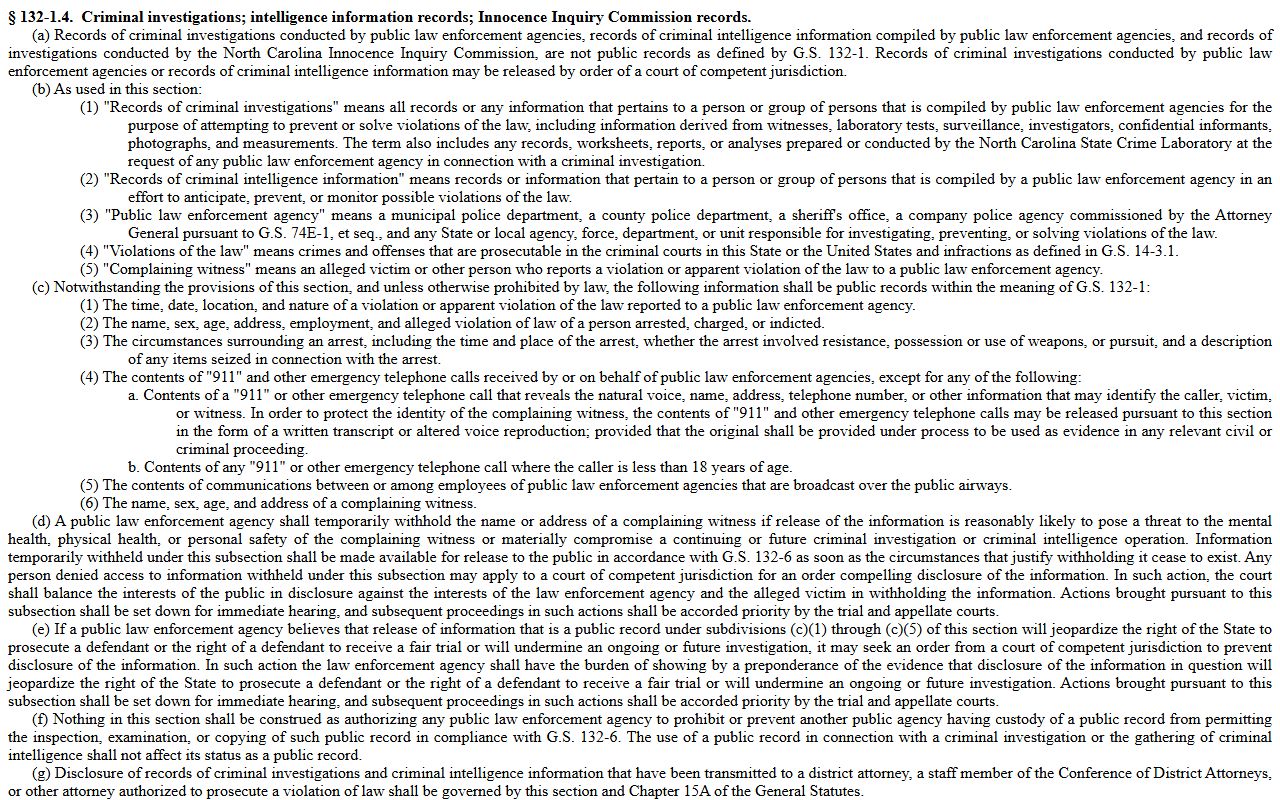
That statute is one reason a court case may be public while police investigative material is not open in the same way.
Sealed and Expunged Criminal Records
Some criminal court records are closed from ordinary public access. Juvenile cases are treated differently from adult criminal files. Sealed cases may be hidden from public inspection by law or court order. Expunged matters are handled under North Carolina expunction statutes and should not be expected to appear in ordinary public Portal or clerk searches once a valid order is processed. Dismissed charges and not-guilty findings may have different expunction paths than convictions.
| Sealed | Expunged | |
|---|---|---|
| Public Visibility | Closed from ordinary inspection by statute or court order | Cleared from public record entries after a valid expunction order |
| Common Basis | Juvenile, protected, sensitive, or court-ordered confidentiality | Dismissal, not-guilty finding, or eligible nonviolent conviction under state rules |
| Main Sources | Juvenile and confidentiality statutes | G.S. 15A-145.5, G.S. 15A-146, and G.S. 15A-153 |
| Practical Limit | A public user may need a court order to inspect | Private background databases may lag even after court processing |
The nonviolent offense expunction source gives the statewide eligibility framework for some conviction-based petitions.
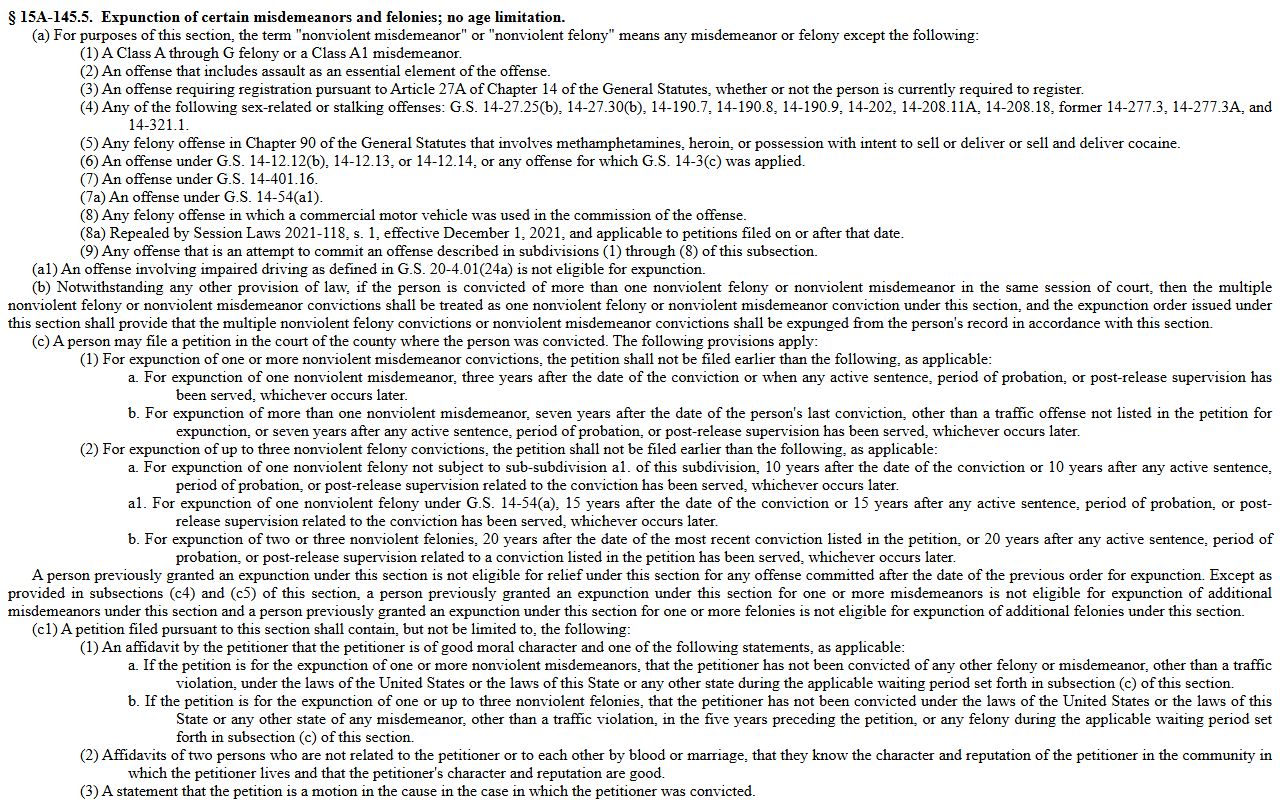
Eligibility depends on the exact charge, disposition, age, prior record, waiting period, and exclusions in state law.
Public Access to Criminal Court Records
North Carolina's public-records framework supports access to ordinary adult criminal court records, but court records and investigative records are not the same. G.S. 132-1 broadly defines public records. G.S. 7A-109 requires clerks to keep records, files, dockets, and indexes open for public inspection during regular hours unless law prohibits access. G.S. 132-1.4 limits criminal investigation and intelligence records.
Key point: The clerk's criminal case file can be public even when sheriff or police investigative material is restricted.
The dismissal and not-guilty expunction source, G.S. 15A-146, applies to certain outcomes that are different from conviction-based relief.
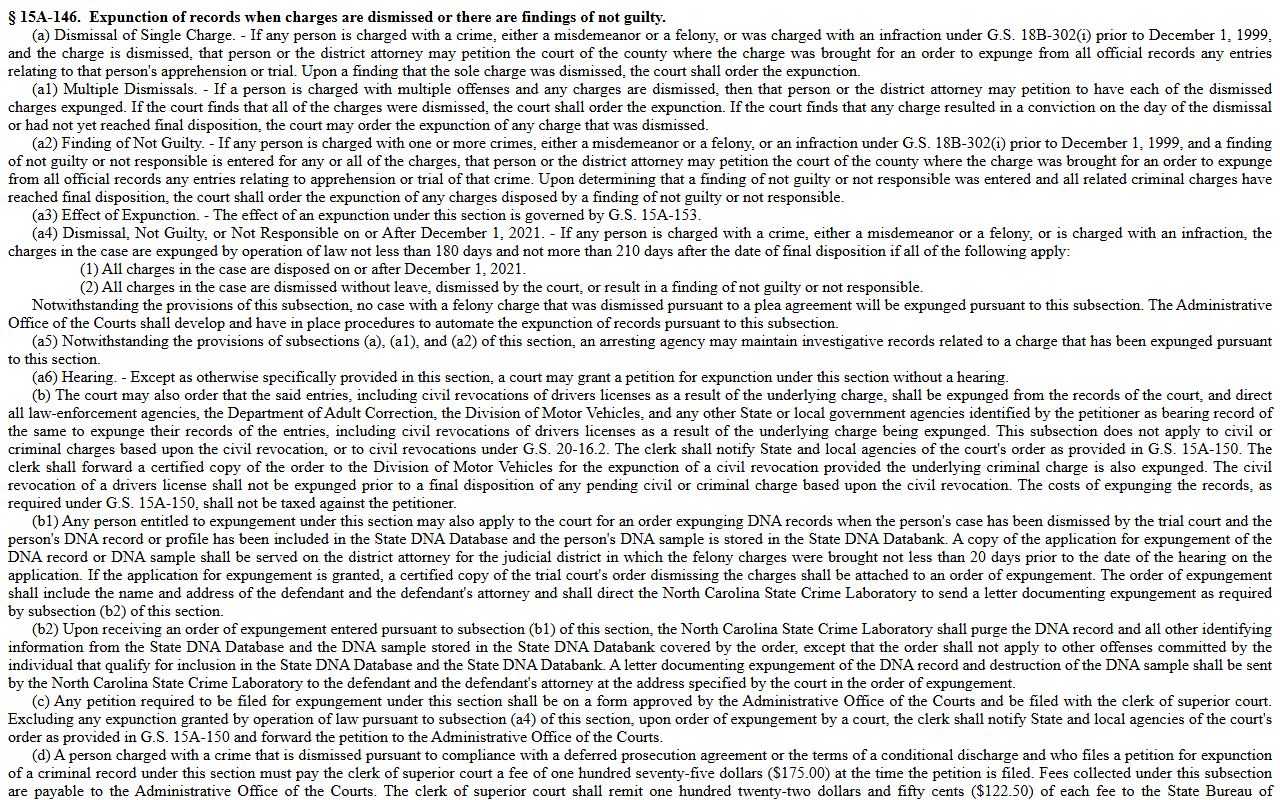
That distinction is central when a record shows that a charge did not end in a conviction.
Criminal Background Check Limits
For official single-county criminal record searches, use the Clerk of Superior Court and the Judicial Branch background-check process. For state prison, probation, parole, and historical offender data, the North Carolina Department of Adult Correction has a separate offender search hub, but it does not replace Alleghany County criminal case records. For custody status, jail information, or victim notices, separate systems such as NC SAVAN or VINELink may apply. A criminal court record should be read with the full disposition and sentence, not just the charge line.
Important: Public case lookups are not FCRA consumer reports and should not be used for regulated screening decisions.
Restricted Alleghany County Criminal Records
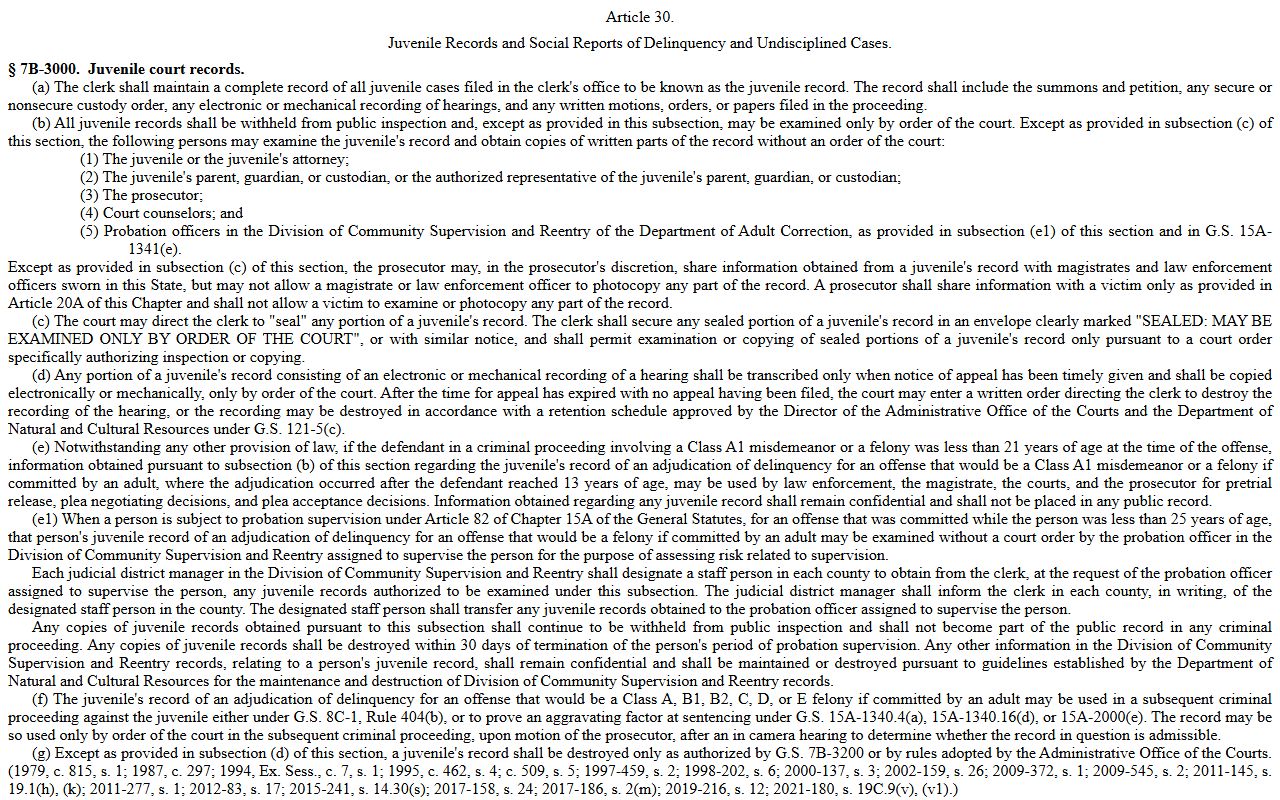
Juvenile records, abuse or neglect records, dependency records, sealed matters, expunged entries, mental health matters, protected personal identifiers, and active investigative files can be withheld or redacted. G.S. 7B-3000 governs juvenile court records, while G.S. 7B-2901 protects abuse, neglect, and dependency files. If a record does not appear online, that absence does not prove the case never existed. It may be sealed, expunged, paper-only, restricted, misspelled, or outside the searched date range.
The juvenile court records statute source is one of the key limits on treating all criminal-related matters as open adult records.
For adult expunctions, the effect of expunction source explains the purpose of clearing public entries.
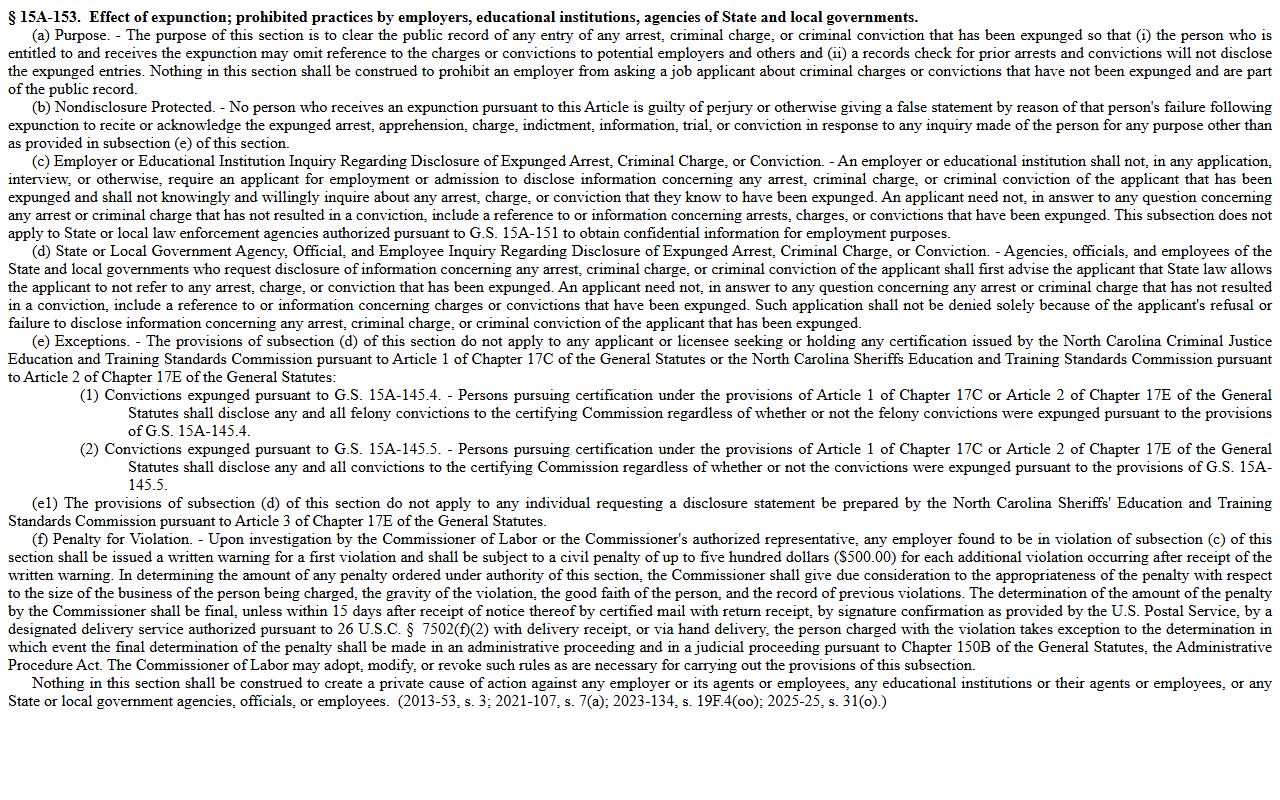
After an expunction order, public searches should not be expected to disclose the cleared arrest, charge, or conviction.