
Search Alleghany County Court Records
The main online access point is the North Carolina eCourts Portal. Alleghany County joined eCourts on July 21, 2025 as part of Track 9, so Portal is the place to start for public case information, Smart Search, hearing searches, payments, and judgment search tools. The NC Judicial Branch Alleghany County page also routes users to court dates, services, local rules, and payment information. Portal use is not the same as getting a certified court copy. It is a public search path, while certified copies and many paper files remain Clerk of Superior Court matters.
A useful search starts with the case number, citation number, party name, business name, or a date range. The Portal text warns that JavaScript and cookies are required for full use, and Tyler requires a CAPTCHA about every ten minutes for anonymous and signed-in users. Older paper documents that existed when Alleghany County went live in eCourts may still have to be reviewed through the Clerk of Superior Court at the courthouse.
- Open the eCourts Portal and choose Smart Search for case records, or Search Hearings for court dates and docket settings.
- Enter a record number, citation number, person name, or business name, using the Portal's last, first format when searching by party.
- Use advanced filters to select Alleghany County, case type, case status, filing dates, or hearing type when those fields are available.
- Review the case summary, docket events, hearing dates, disposition, and payment status without assuming every document image is available online.
- Contact the Clerk of Superior Court for paper files, certified copies, or a certified single-county criminal record search.
The Portal source page shows the statewide eCourts access point used for Alleghany County court records.
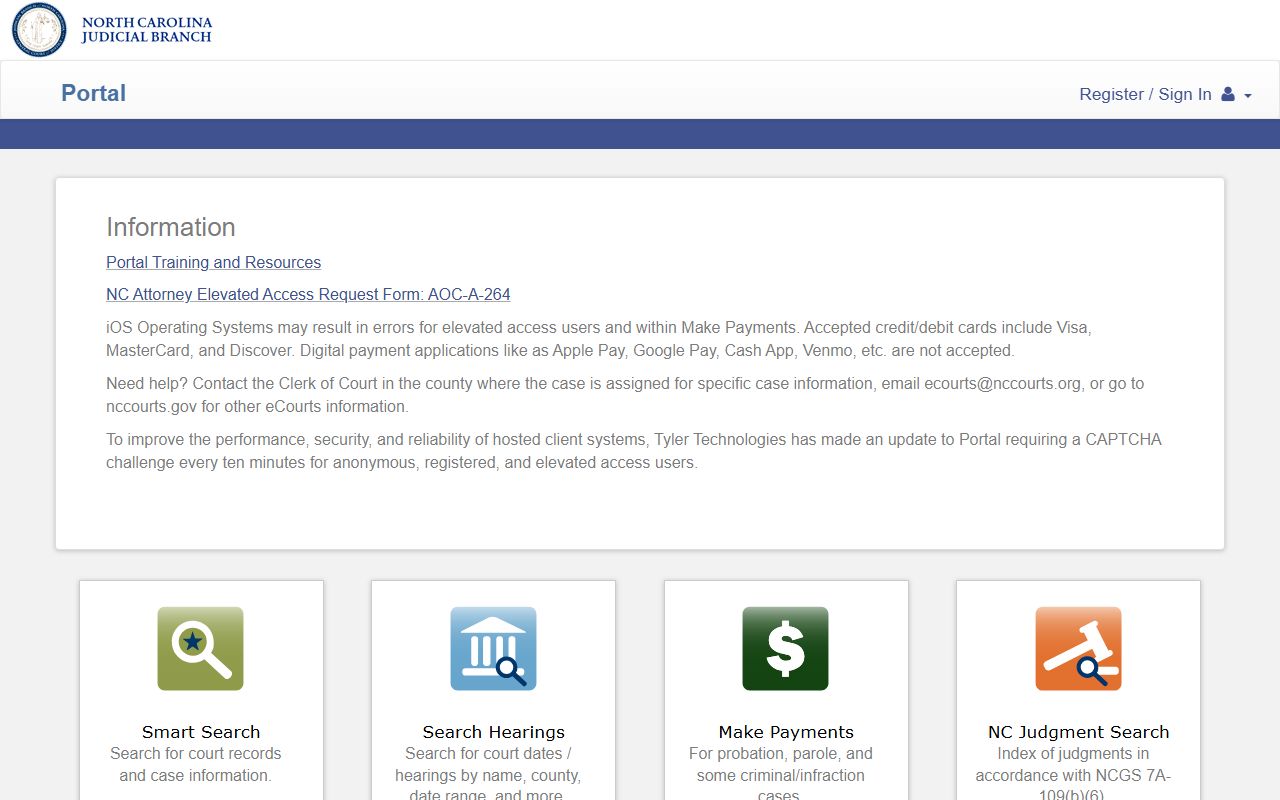
That Portal is the online front door, but the Clerk of Superior Court remains the local record custodian for copies and file-room access.
Alleghany County Court Records Search Fields
Smart Search supports broad record-number and name searching, then adds filters that narrow results. The research file did not inspect live result screens because the Portal requires JavaScript, cookies, CAPTCHA, and interactive use, so the safest reading is that search fields are confirmed while document availability is case-specific. Use exact spellings when possible. Wildcards can help, but the Portal has minimum character rules for wildcard case numbers, names, and business or nickname searches.
| Field Label | Type | Required | Notes / Format |
|---|---|---|---|
| Record Number or Name | Text | One criterion required | Use case number or Last, First Middle Suffix format. Wildcards require minimum character counts. |
| Last Name / First Name / Middle Name | Text | Conditional | Used for person searches, with suffix available as a separate dropdown. |
| Filter by Location | Dropdown or multi-select | Optional filter | Select Alleghany County when limiting a statewide search. |
| Search by | Dropdown or radio choice | Optional | Visible options include party name, nickname, business name, and sounds like. |
| Case Type / Case Status | Dropdown | Optional | Use when the type or status is known, but options may vary by Portal access. |
| File Date Start / End | Date | Optional | Useful when the filing period is known. |
| FBI, SO, or Booking Number | Text | Optional | Advanced criminal identifiers may appear, but public visibility varies. |
The NC Courts court records help-topic source supports the public-record access context for these Alleghany County court records fields.
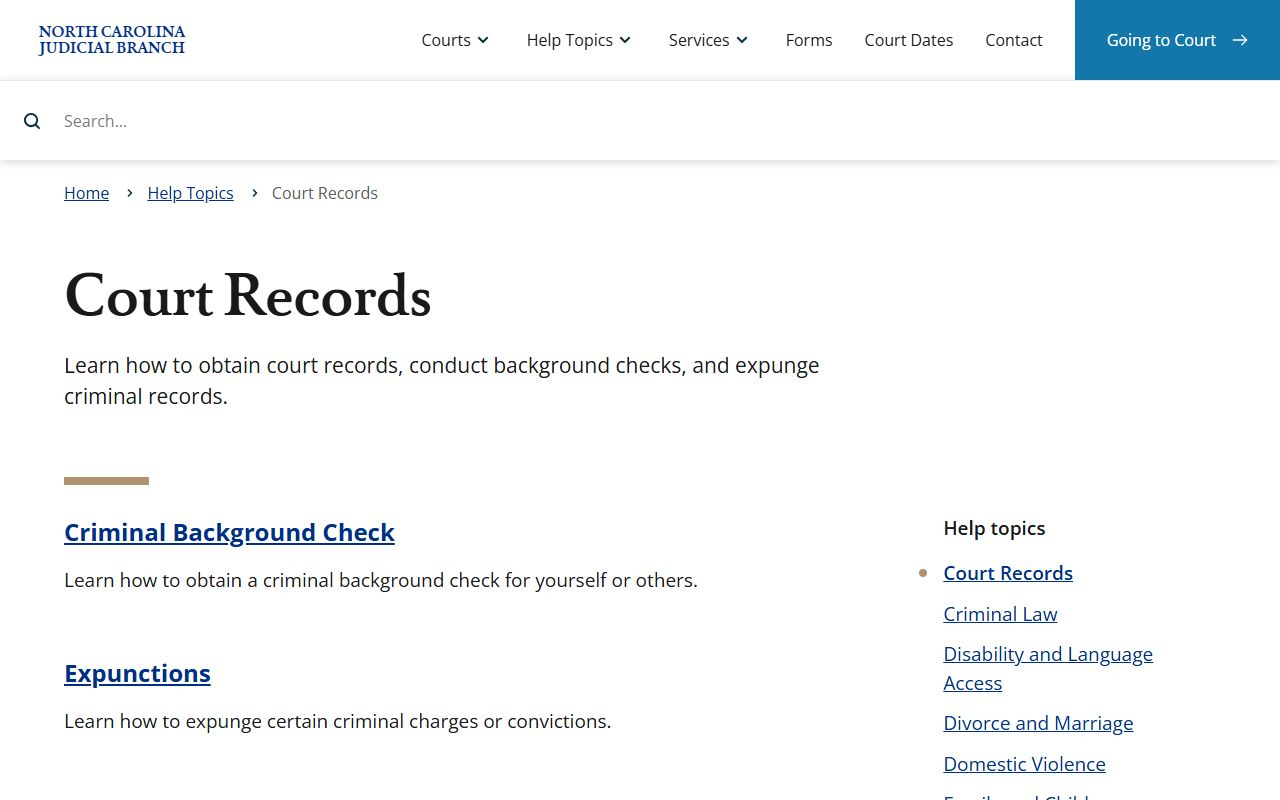
These fields help locate the case, while the final copy or certification route still depends on the type of record and the clerk's file.
Types of Alleghany County Court Records
Alleghany County is part of North Carolina's unified General Court of Justice. Superior Court handles felony criminal cases, higher-value civil actions, jury matters, caveats, and other superior-level proceedings. District Court handles misdemeanors, infractions, traffic matters, domestic cases, juvenile matters, small claims through magistrates, and lower-value civil cases. Estates and probate work are handled by the Clerk of Superior Court acting as probate judicial officer, not by a separate county probate court.
Several local offices can be confused. The Clerk of Superior Court keeps court records, divorce judgments, criminal case files, estate files, certified criminal searches, and paper court files. The Register of Deeds keeps marriage records, birth and death records, deeds, plats, notary oaths, and recorded instruments. For case-file research, stay with the court system and the Alleghany County Clerk of Superior Court.
- Civil court records include complaints, summonses, answers, motions, orders, judgments, arbitration material, and hearing notices.
- Criminal court records include charging instruments, appearances, bonds, pleas, dispositions, judgments, sentences, costs, and probation terms.
- Docket and calendar records show hearing dates, case numbers, parties, hearing type, courtroom, and judicial officer where available.
- Family and divorce court records include divorce judgments and domestic orders, with juvenile and adoption records treated as restricted.
- Estate and special proceeding records can include wills, inventories, accountings, orders, caveats, and notices.
- Traffic court records are District Court records for citations, infractions, misdemeanor traffic charges, dispositions, fines, and costs.
What Alleghany County Court Records Show
A typical Alleghany County court record can identify the court location, case number, division, case type, filing date, parties, attorneys, hearing dates, charge or claim information, docket entries, financial obligations, status, and disposition. Portal visibility depends on the case type, access level, redactions, sealed status, and whether the document was paper-only at eCourts go-live. A docket line may tell the reader that an order was entered, while the signed order itself may require a clerk copy request.
| Field | What It Shows |
|---|---|
| Case Number | The court record identifier used in Smart Search, clerk requests, hearing searches, and payment questions. |
| Filing Date | The date the case or filing entered the court system. |
| Parties | Names of plaintiffs, defendants, petitioners, respondents, or charged persons, depending on case type. |
| Docket Entries | A chronological record of filings, hearings, orders, continuances, and other case activity. |
| Hearing Data | Hearing type, date, courtroom, judicial officer, or setting information when available. |
| Disposition | The outcome, such as judgment, dismissal, guilty plea, verdict, order, or other final event. |
| Financial Fields | Fines, court costs, payments, balances, or online payment eligibility where shown. |
The NC Courts obtaining court records source explains public terminals, paper files, and county clerk copy channels.
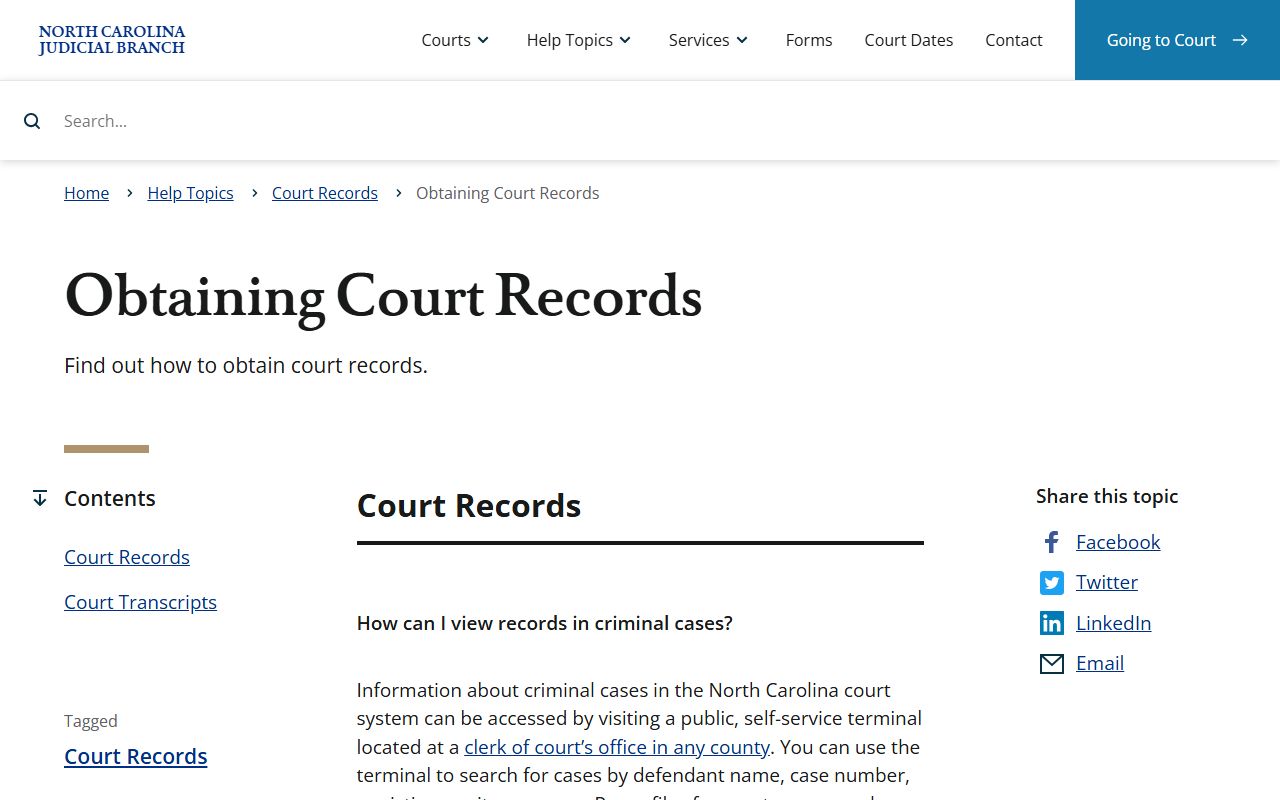
The same distinction matters in Alleghany County: online case data may be enough for a date check, but legal use often needs a clerk-issued copy.
Public Access to Alleghany County Court Records
North Carolina law gives the public broad access to government records and court files, but it also makes exceptions. G.S. 132-1 defines public records broadly. G.S. 7A-109 requires clerks to maintain records, files, dockets, and indexes and makes them open for public inspection during regular office hours except where law says otherwise. Those rules support Portal searches, clerk terminals, and in-person inspection for ordinary public files.
The practical access chain is online search, public self-service terminal, clerk paper file, then certified copy request if needed. Criminal, civil, special proceeding, and estate information may be available through public terminals at clerk offices. Certified single-county criminal record searches use AOC-CR-314 through the Clerk of Superior Court and cost $25. Copy costs can also apply, including $2 for the first page of a prepared copy and $0.25 for each extra page under the current cost chart.
Note: Public inspection rights do not override sealing orders, juvenile confidentiality, expunction law, or mandatory redaction of protected identifiers.
The Judicial Branch request-a-public-record source explains which requests go to NCAOC and which should go to the county clerk.
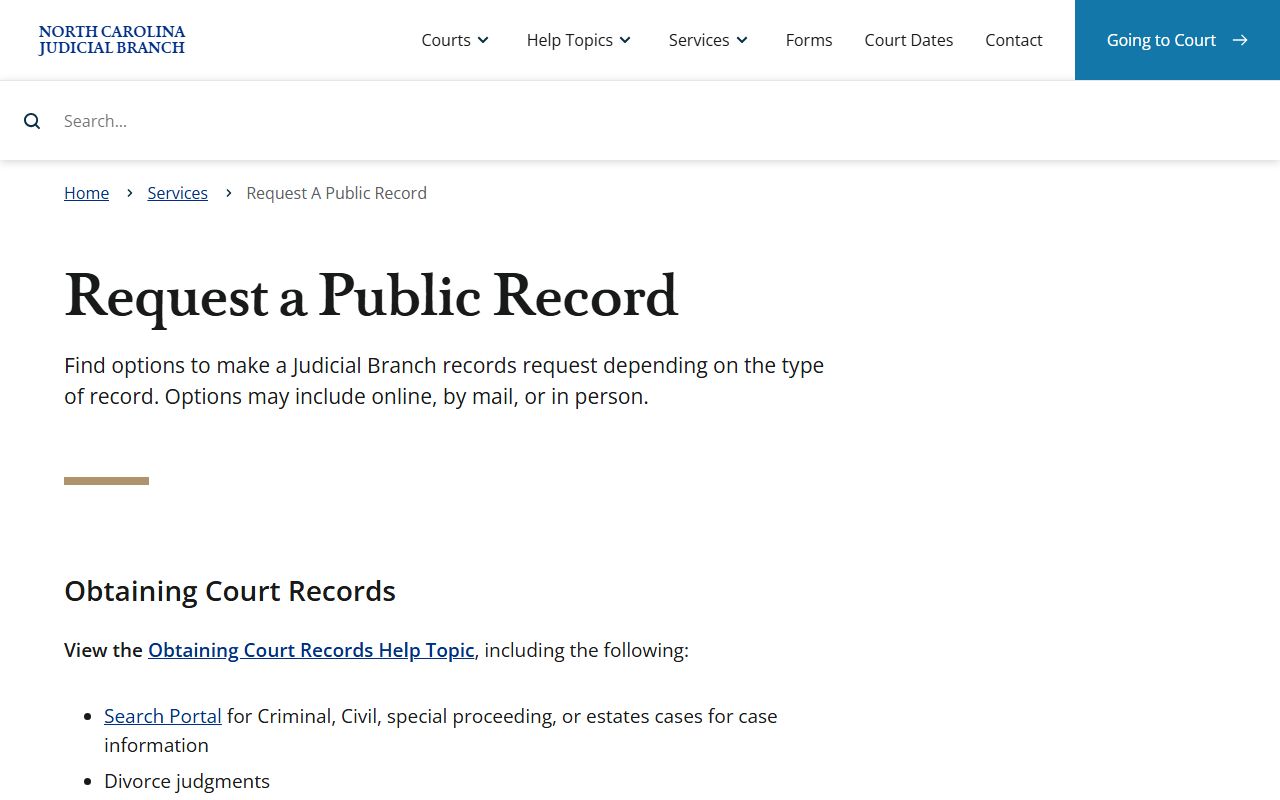
For Alleghany County court documents, that routing note points most copy requests back to the Clerk of Superior Court.
Restricted Alleghany County Court Records
Not every court record is open. Juvenile delinquency and undisciplined matters are governed by G.S. 7B-3000. Abuse, neglect, and dependency files are confidential under G.S. 7B-2901 unless a court order or statute authorizes access. Adoption records, mental health or commitment proceedings, sealed files, expunged matters, protected personal identifiers, and some criminal investigation records are not handled like ordinary civil or adult criminal files.
Expunction is also important. G.S. 15A-146 covers some dismissed charges and not-guilty findings, while G.S. 15A-145.5 covers some nonviolent misdemeanor and felony convictions. Once a valid expunction order applies, public users should not expect Portal or clerk searches to reveal the expunged arrest, charge, or conviction.
The NCAOC public-record request source provides the statewide request form for Judicial Branch records.
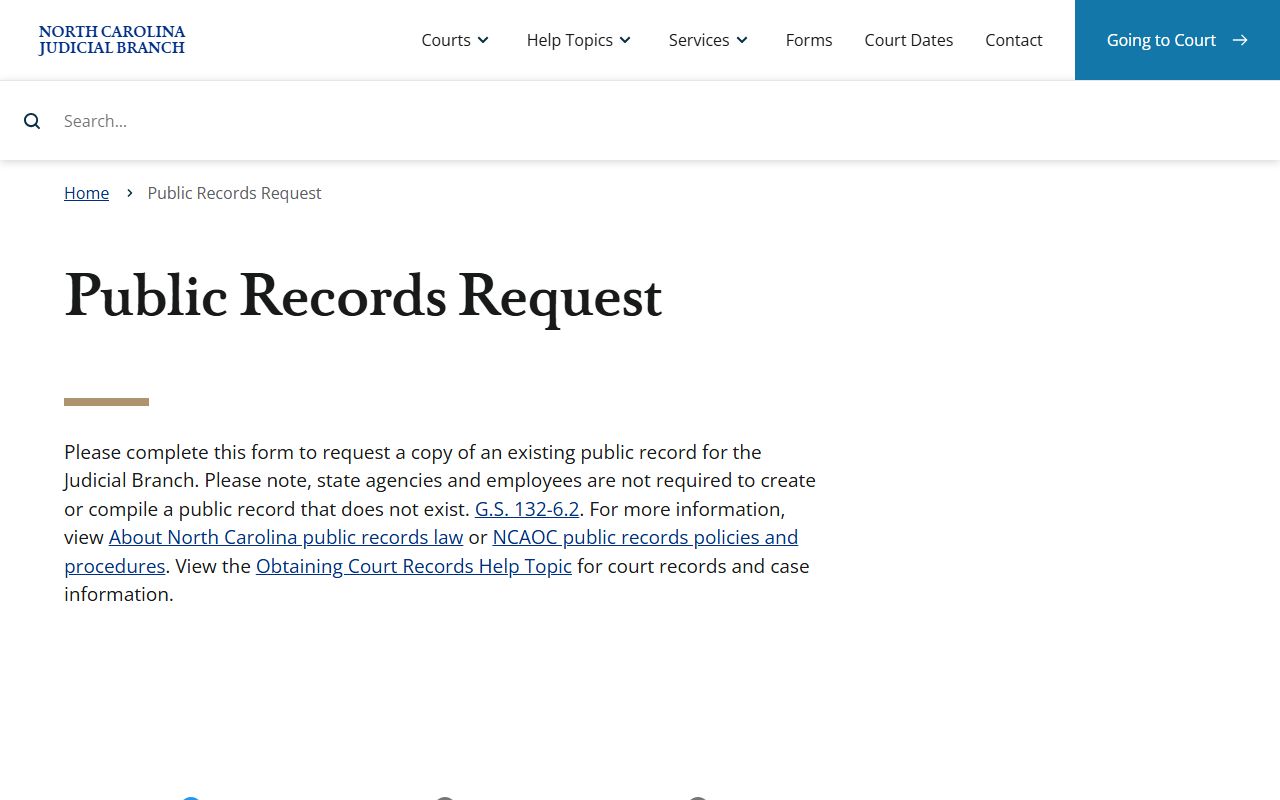
That form is useful for Judicial Branch administrative records, while local case document copies normally stay with the county clerk.
Alleghany County Court Record Requests
In-person court record work happens at the Alleghany County Courthouse in Sparta. Bring the case number if known, the exact party name, a date range, and a clear reason for the type of copy needed. Ask for a certified copy if the record will be used for filing, licensing, court, or an official purpose. For mail contact, use the courthouse mailing address, not the county administration building. Court payments and traffic citations also route through the Clerk of Superior Court when paid in person or by mail.
Clerk of Superior Court
Alleghany County Courthouse
12 N Main St
Sparta, NC 28675
336-372-3900
Monday-Friday, 8:00 AM-5:00 PM
The current court costs source is the statewide source for court copy, filing, criminal search, estate, and miscellaneous fee schedules.
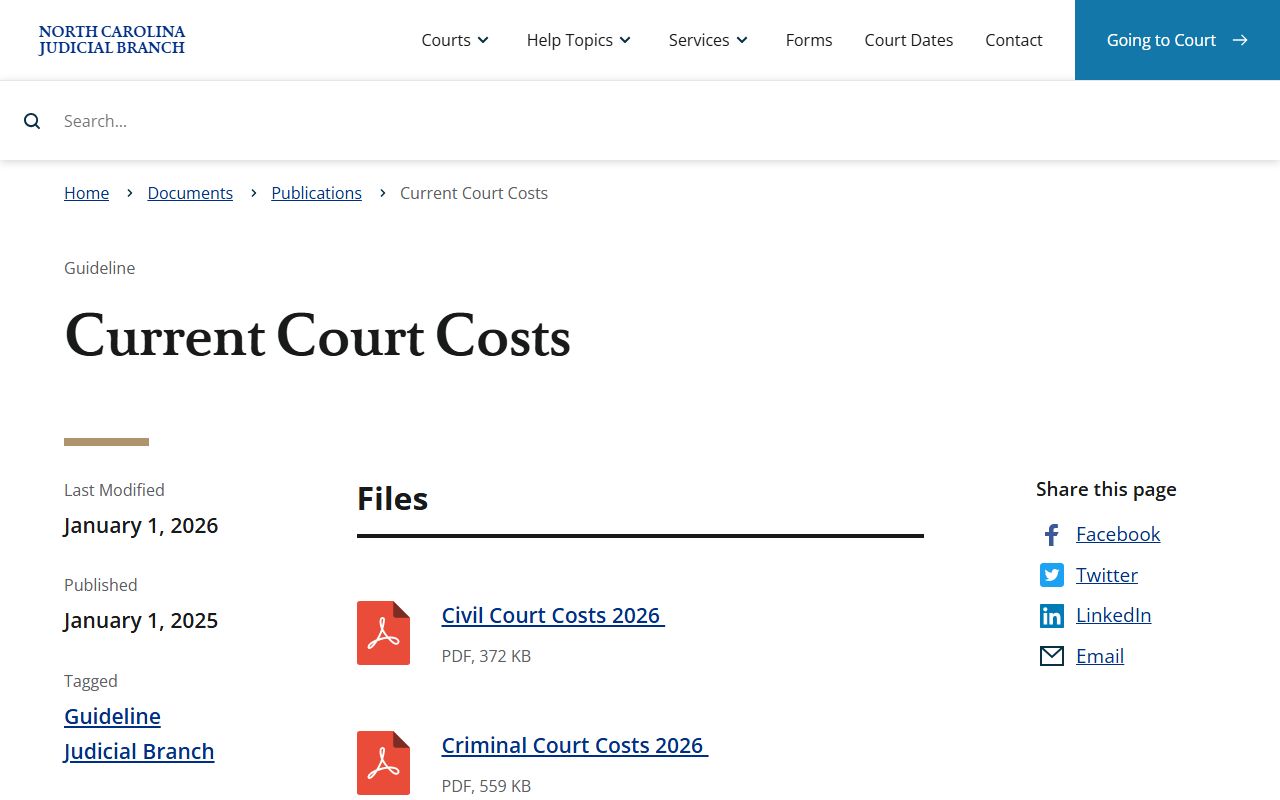
Because fees can change by statewide update, confirm the current charge before mailing a request or sending payment.